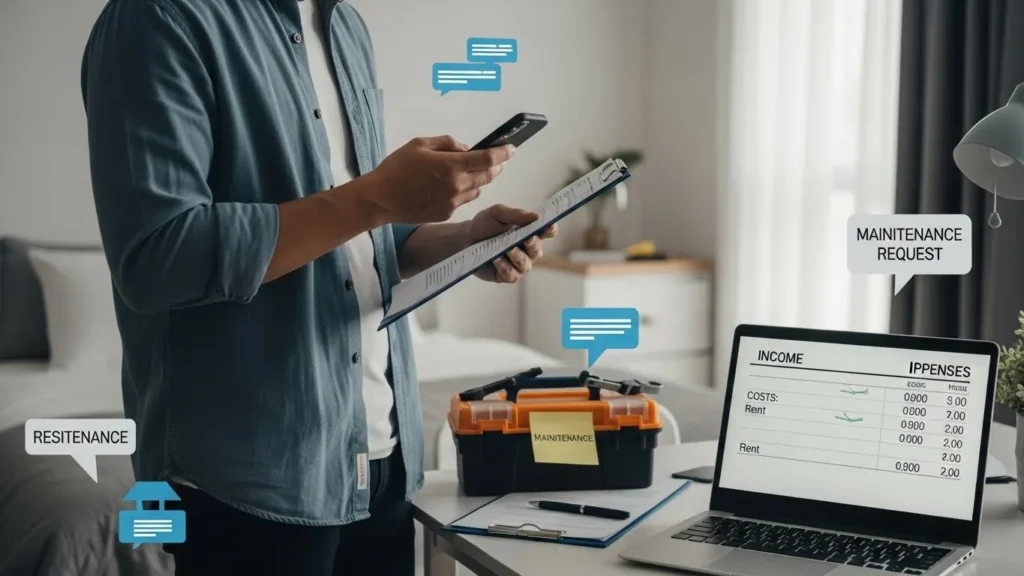
“The Promise That Attracts So Many Investors”
Rental property is often sold with a simple, powerful idea.
Buy a property.
Rent it out.
Collect checks every month.
It sounds calm. Predictable. Almost automatic.
I’ve met countless professionals who entered real estate believing rental income would quietly run in the background—like dividends or interest.
Some were surprised.
Others were overwhelmed.
A few felt misled.
The truth is more nuanced:
👉 Rental property can generate steady income—but it is not automatically passive.
Whether it feels passive or demanding depends on factors many people underestimate at the start.
What “Passive Income” Actually Means in Practice
True passive income has one defining feature:
It requires little to no ongoing decision-making or intervention.
Rental property, on the other hand, often involves:
- Human behavior
- Physical assets that age
- Legal and operational responsibilities
- Irregular, time-sensitive issues
Even well-planned rentals require oversight.
In my experience, the confusion comes from mixing income regularity with effortlessness. These are not the same thing.
Rental income may be recurring—but the work behind it rarely disappears completely.
The Day-to-Day Responsibilities Few Ads Mention
Owning a rental property means managing a living system, not a static asset.
Common ongoing tasks include:
- Responding to tenant concerns
- Coordinating repairs and maintenance
- Tracking rent payments
- Managing vacancies and turnovers
- Reviewing expenses and cash flow
Even with good tenants, something eventually needs attention.
The issue isn’t that these tasks exist.
It’s that many investors underestimate how often they occur—and how disruptive they can feel.
Maintenance: The Most Underestimated Time Cost
Every property wears down.
Appliances fail.
Plumbing leaks.
Heating systems age.
Roofs don’t last forever.
Maintenance doesn’t follow a neat schedule.
In practice, it often:
- Happens unexpectedly
- Requires urgent decisions
- Interrupts personal or professional time
Outsourcing helps—but oversight remains necessary.
A “hands-off” property can still demand attention at the least convenient moments.
Tenants Change the Passive Equation
People introduce variability.
Even responsible tenants may:
- Pay late occasionally
- Request changes or repairs
- Move unexpectedly
- Interpret agreements differently
Managing relationships—especially during disputes or transitions—requires emotional energy as well as time.
This is one reason rental income feels passive in spreadsheets but active in real life.
Vacancy Periods Break the Passive Illusion
Vacancies don’t just pause income—they create work.
During vacancy, owners must:
- Advertise the property
- Screen applicants
- Prepare the unit
- Handle showings and paperwork
Meanwhile, expenses continue.
Mortgage.
Taxes.
Insurance.
Maintenance.
A vacant property is often more demanding than an occupied one—and far from passive.
The Financial Side Requires Ongoing Attention
Rental income isn’t simply “rent minus mortgage.”
Real-world cash flow involves:
- Repairs and reserves
- Property taxes
- Insurance premiums
- Management costs
- Unexpected expenses
Ignoring these details leads to distorted expectations.
I’ve seen investors feel frustrated not because returns were poor—but because the mental load was higher than expected.
A Clear Comparison: Passive vs Rental Income
| Truly Passive Income | Typical Rental Property |
|---|---|
| Minimal intervention | Ongoing oversight |
| Predictable effort | Irregular demands |
| No human management | Tenant relationships |
| Low time sensitivity | Urgent issues possible |
| Stable mental load | Variable emotional load |
This doesn’t make rental property “bad.”
It simply makes it different from the label often used.
When Rental Property Feels Less Active
There are scenarios where rental income feels closer to passive.
For example:
- Long-term tenants with stable histories
- Newer properties with fewer repairs
- Professional property management in place
- Strong financial buffers for surprises
Even then, involvement is reduced—not eliminated.
Rental property tends to move along a spectrum, not a binary state.
Property Management: Helpful, Not Magical
Hiring a property manager can dramatically reduce hands-on work.
But it doesn’t erase responsibility.
Owners still need to:
- Monitor performance
- Approve expenses
- Review reports
- Make strategic decisions
Management shifts tasks, not accountability.
This distinction matters for expectations.
Common Mistakes New Investors Make
Many frustrations stem from avoidable assumptions.
Common missteps include:
- Treating rental income as effortless
- Underestimating maintenance costs
- Ignoring time and emotional demands
- Failing to plan for vacancies
- Assuming management equals passivity
Awareness upfront prevents disappointment later.
Why This Matters Today
Rental property remains attractive for good reasons.
It can:
- Generate income
- Diversify assets
- Provide inflation-linked cash flow
But expectations shape experience.
When investors expect passivity and encounter activity, frustration follows.
When they expect involvement and plan accordingly, confidence increases.
Clarity is the difference.
How to Think About Rental Property More Accurately
A more realistic framing helps.
Instead of asking:
“Is rental property passive income?”
Ask:
- How much time am I willing to invest?
- What level of variability can I tolerate?
- Do I prefer systems or human management?
Rental property works best when aligned with temperament—not just returns.
Key Takeaways
- Rental property income is recurring, not automatically passive
- Maintenance and tenants introduce unpredictability
- Vacancies create both financial and time pressure
- Property management reduces work, not responsibility
- Clear expectations lead to better long-term satisfaction
Rental income can be rewarding—but it behaves more like a small business than a silent machine.
Frequently Asked Questions
1. Is rental property ever truly passive?
Rarely. It can become low-effort, but some involvement usually remains.
2. Does hiring a property manager make it passive?
It reduces hands-on work, but owners still oversee decisions and performance.
3. Is rental property riskier because it’s not passive?
Not necessarily. It simply carries different types of responsibility.
4. Why do people still call it passive income?
Because income can be recurring—but the term often overlooks the operational side.
5. Is rental property suitable for busy professionals?
It can be, if expectations, systems, and support are aligned.
A Clear, Calm Conclusion
Rental property isn’t a bad investment.
But it isn’t a silent one either.
Understanding the difference between recurring income and passive effort allows investors to plan realistically—and avoid unnecessary stress.
When expectations match reality, rental property becomes a tool—not a frustration.
Disclaimer: This article is for educational purposes only and reflects general financial insights, not personalized investment advice.

Selina Milani is a personal finance writer focused on clear, practical guidance on money, taxes, insurance, and investing. She simplifies complex decisions with research-backed insights, calm clarity, and real-world accuracy.


Pingback: The Truth About “Passive Income” — What Actually Works (And What Quietly Doesn’t)
Pingback: Rent vs Buy — The Real Math Everyone Gets Wrong (And Why It Matters More Than You Think)