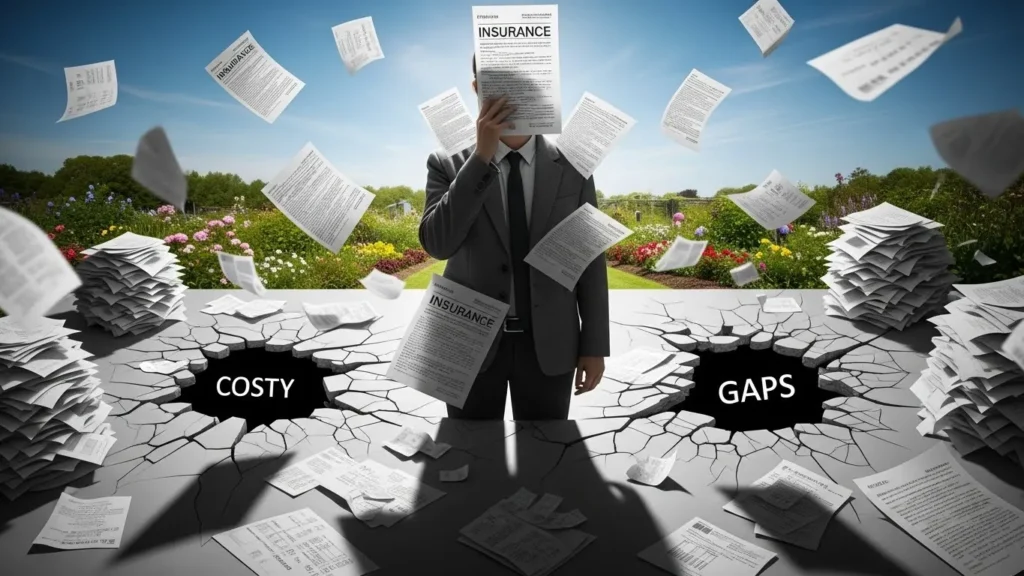
The Quiet Pattern Almost Everyone Follows
The renewal email arrives.
You glance at the premium.
It looks familiar.
Nothing dramatic changed.
So you click “Renew.”
No review.
No questions.
No second thought.
This single habit—repeating year after year—is why most policyholders don’t actually know what their insurance covers anymore.
And it’s not because they’re careless.
It’s because the system quietly trains them not to look.
Insurance Reviews Feel Optional—Until They’re Not
Insurance doesn’t demand attention.
Unlike bills, it doesn’t interrupt daily life.
Unlike investments, it doesn’t fluctuate visibly.
Unlike health, it doesn’t send signals—until something goes wrong.
So the brain categorizes insurance as:
“Important, but not urgent.”
That mental label is powerful.
It’s why reviews get postponed indefinitely—even by responsible people.
Why Familiarity Creates False Safety
Once a policy exists, it feels handled.
The longer it stays active:
- The more normal it feels
- The less risky it seems
- The less motivation there is to revisit it
Familiarity reduces perceived danger—even when real-world risk has changed dramatically.
This is why long-held policies are often the least accurate ones.
The Renewal Trap: Comfort Masquerading as Confirmation
Renewals feel like reassurance.
“If something was wrong, someone would’ve told me.”
But renewals only confirm:
- Payment went through
- The policy still exists
They do not confirm:
- Coverage adequacy
- Lifestyle alignment
- New exclusions
- Updated limits
Renewal rewards inaction with comfort.
Real-Life Example: Same Policy, Different Life
A couple buys insurance early in their career.
Years later:
- Income triples
- Home upgrades
- Children arrive
- Liabilities increase
The policy stays unchanged.
On paper, they’re insured.
In reality, they’re under-covered for their current life.
The risk didn’t appear suddenly—it grew quietly.
Why Reviewing Coverage Feels Emotionally Draining
Insurance reviews trigger:
- Mental effort
- Uncertainty
- Fear of bad news
The brain prefers avoidance.
People subconsciously worry:
“What if I discover something missing?”
Avoidance preserves peace—temporarily.
But peace without accuracy is fragile.
Complexity Discourages Curiosity
Insurance language is dense by design.
Long documents.
Technical terms.
Endless clauses.
This creates a simple response:
“I’ll trust it.”
Complexity doesn’t educate—it intimidates.
So instead of reviewing, people defer responsibility to the policy itself.
The “Nothing Happened” Bias
Every year without a claim reinforces a belief:
“I guess it’s working.”
But insurance doesn’t prove itself by absence.
Silence isn’t evidence of protection—it’s just absence of testing.
Claims are the first real audit.
And they come too late for changes.
Comparison Table: Assumption vs Reality
| Common Belief | What’s Actually Happening |
|---|---|
| “My policy is fine” | It may be outdated |
| “I’d know if something changed” | Many changes go unnoticed |
| “Reviews are for big problems” | Small gaps create big losses |
| “I’ll check if needed” | Claims aren’t adjustable moments |
| “This is rare anyway” | Insurance exists for rare events |
This gap explains most insurance shocks.
Why Advisors Don’t Automatically Trigger Reviews
Many policyholders assume:
“My advisor will tell me if something’s wrong.”
But advisors often rely on:
- Client requests
- Life event notifications
- Scheduled check-ins
If life changes quietly, coverage stays frozen.
Silence on both sides equals stagnation.
Hidden Tip: Coverage Gaps Grow Faster Than You Think
Coverage doesn’t age linearly.
It drifts faster when:
- Inflation rises
- Assets appreciate
- Responsibilities increase
Even a well-designed policy can become misaligned in just a few years.
Annual reviews aren’t excessive—they’re preventive maintenance.
The Most Common Review-Blocking Thoughts
- “It’s probably fine”
- “I don’t have time right now”
- “I’ll do it next year”
- “I don’t want to deal with upsells”
- “Nothing major changed”
These thoughts feel reasonable.
Collectively, they’re expensive.
Mistakes to Avoid (That Feel Responsible)
- Reviewing only when premiums rise
- Checking benefits but ignoring exclusions
- Assuming past choices still fit present life
- Confusing renewal with validation
- Relying only on memory
Good intentions don’t replace verification.
Simple, Actionable Review Steps (No Deep Reading Required)
You don’t need to read the full policy.
Just do this once a year:
- List major life changes since purchase
- Ask: “What isn’t covered?”
- Check coverage limits vs current asset value
- Confirm deductibles and sub-limits
- Save a 1-page summary for reference
This takes less than an hour—and prevents years of risk.
Why This Matters Today (And Always Will)
Modern insurance is:
- More customized
- More modular
- More exclusion-driven
Choice increases flexibility—but also drift.
Without regular reviews, policies slowly stop matching reality.
In a world of changing lives, static coverage is the real danger.
Key Takeaways
- Most people don’t skip reviews intentionally
- Familiarity reduces perceived risk
- Renewal creates false reassurance
- Complexity discourages engagement
- Coverage gaps grow silently over time
- Annual reviews prevent major surprises
Frequently Asked Questions
1. How often should insurance coverage be reviewed?
At least once a year and immediately after major life changes.
2. Are reviews only needed if premiums change?
No. Premium stability doesn’t guarantee coverage adequacy.
3. Do small changes really matter?
Yes. Small mismatches compound during large claims.
4. What’s the fastest way to review without stress?
Focus on exclusions, limits, and life changes—not full documents.
5. Is underinsurance more common than no insurance?
Yes. Most claim shocks come from gaps, not absence of policies.
A Clean, Simple Conclusion
Most policyholders don’t avoid reviews because they don’t care.
They avoid them because everything feels fine.
But insurance doesn’t protect comfort—it protects accuracy.
The most powerful habit isn’t buying insurance.
It’s revisiting it before life tests it.
Disclaimer: This article is for general informational purposes only and does not replace personalized insurance or financial advice. Coverage details vary by policy and provider.

Selina Milani is a personal finance writer focused on clear, practical guidance on money, taxes, insurance, and investing. She simplifies complex decisions with research-backed insights, calm clarity, and real-world accuracy.


Pingback: The Hidden Cost of Choosing Insurance Based on Price — Why the Cheapest Policy Often Becomes the Most Expensive Mistake
Pingback: Why Insurance Gaps Appear Over Time — The Slow, Silent Drift That Leaves People Under protected
Pingback: The Quiet Risk of Not Updating Beneficiaries — How One Forgotten Detail Can Undo Years of Planning
Pingback: Why Insurance Reviews Are Rare but Crucial — The One Habit That Prevents Financial Regret
Pingback: Why People Misjudge Insurance Adequacy — And Don’t Realize the Gap Until It Hurts
Pingback: You’re Paying Twice for Insurance—And Still Not Fully Protected
Pingback: The Renewal Trap: How Auto-Renew Costs You More Than Money