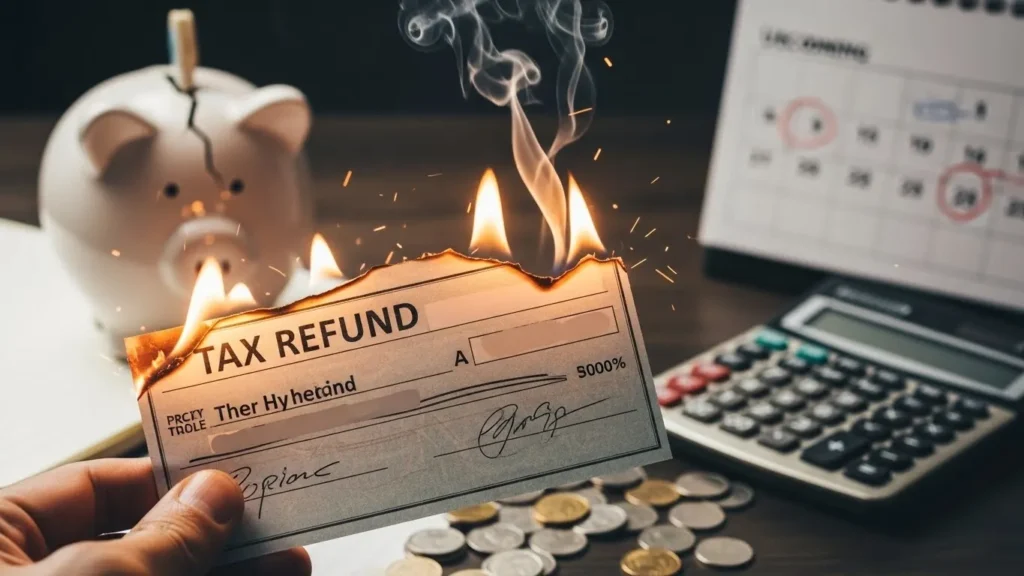
That Exciting Refund Moment (And Why It’s Misleading)
The notification pops up.
Your tax refund is approved.
For a brief moment, it feels like a financial win. A reward. Extra money you didn’t expect.
Many people immediately start planning how to spend it—pay off a bill, book a trip, upgrade something long overdue.
But here’s the uncomfortable truth most people never hear:
A tax refund usually means you made a money mistake months ago.
Not a dramatic one.
Not a reckless one.
Just a quiet, common mistake that costs millions of households every year—without them realizing it.
Understanding this doesn’t make you “anti-refund.”
It makes you financially smarter.
What a Tax Refund Actually Means (In Simple Terms)
A tax refund is not a bonus.
It’s not free money.
It’s not a reward for being responsible.
A tax refund simply means this:
You paid more tax during the year than you actually owed.
In other words, the government held onto your money—and returned it later.
Think about that for a moment.
If a friend borrowed ₹50,000 from you, kept it all year, and gave it back without interest, would that feel like a gift?
Probably not.
That’s exactly what happens with many tax refunds.
Why So Many People End Up Overpaying Taxes
Most employees don’t choose their tax payments consciously. Taxes are deducted automatically from every paycheck.
That makes overpayment easy—and invisible.
Common reasons refunds happen include:
- Conservative tax withholding settings
- Claiming fewer allowances than you qualify for
- Fear of underpaying and facing penalties
- Complex income sources you don’t fully understand
- Relying on outdated tax assumptions
None of these make you irresponsible.
They make you normal.
But normal doesn’t always mean optimal.
The Hidden Cost of Getting a Tax Refund
The real cost of a tax refund isn’t obvious.
It doesn’t show up as a fee or penalty.
It shows up as missed opportunity.
While your money sits with the government, you can’t use it to:
- Pay down high-interest debt
- Build an emergency fund
- Invest and compound returns
- Improve monthly cash flow
- Reduce financial stress during the year
Even modest amounts matter.
A Simple Example
Let’s say you receive a ₹60,000 refund.
That means roughly ₹5,000 per month was withheld unnecessarily.
If that ₹5,000 had been available monthly, you could have:
- Reduced credit card interest
- Avoided short-term borrowing
- Built savings gradually
- Covered unexpected expenses calmly
Instead, many people struggle during the year—then feel relief when the refund arrives.
That relief hides the real problem.
Why Refunds Feel Good (Psychology at Work)
If refunds are inefficient, why do people love them?
Because refunds tap into powerful psychological triggers:
- Forced savings: You didn’t have to think about saving
- Delayed gratification: The lump sum feels rewarding
- Mental accounting: Refund money feels separate from regular income
- Loss avoidance: Overpaying feels safer than underpaying
In short, refunds feel responsible—even when they aren’t financially optimal.
This is why the idea persists.
Refund vs. Better Paychecks: A Clear Comparison
| Aspect | Big Tax Refund | Optimized Withholding |
|---|---|---|
| Monthly cash flow | Lower | Higher |
| Access to money | Delayed | Immediate |
| Interest/returns | Lost | Possible |
| Financial flexibility | Limited | Strong |
| Stress during year | Often higher | Often lower |
| Perceived safety | Feels safer | Requires awareness |
| Long-term efficiency | Lower | Higher |
This isn’t about extremes.
It’s about balance and awareness.
When a Tax Refund Might Make Sense
There are situations where refunds aren’t a mistake.
For example:
- Highly irregular income
- Freelance or commission-based work
- Major life changes mid-year
- Difficulty managing money monthly
- Risk of underpayment penalties
In these cases, over-withholding can act as a safety buffer.
The key difference is intentionality.
An intentional refund strategy is very different from an accidental one.
The Smarter Alternative Most People Ignore
Instead of aiming for a refund, financially savvy people aim for this:
Pay as close as possible to what you actually owe.
Not zero difference.
Not perfection.
Just closer.
That usually means:
- Slightly higher monthly income
- Smaller refund or small balance due
- More control over your own money
- Better alignment with real expenses
This approach doesn’t require advanced finance knowledge.
It requires awareness.
Practical Steps to Reduce an Unnecessary Refund
You don’t need to overhaul everything at once.
Start small.
Step 1: Review Last Year’s Refund
Ask yourself:
- How much did I get back?
- Was that money useful during the year?
Step 2: Adjust Withholding Gradually
Small changes matter. Even modest adjustments improve cash flow.
Step 3: Redirect Monthly Gains
Decide in advance where extra monthly money goes:
- Debt repayment
- Emergency fund
- Investment
- Savings goal
Without a plan, extra cash disappears.
Step 4: Re-check Annually
Life changes. Income changes.
Your tax setup should too.
Common Mistakes to Avoid
Many people swing too far in the other direction.
Avoid these traps:
- Drastically reducing withholding without understanding impact
- Ignoring self-employment or side income taxes
- Treating refunds as “fun money” every year
- Never reviewing tax settings after raises or job changes
Balance beats extremes.
Why This Matters More Than People Realize
Money stress doesn’t come from big disasters alone.
It comes from:
- Tight months
- Unexpected expenses
- Small cash-flow gaps
- Feeling behind despite earning well
Tax refunds often mask these issues instead of fixing them.
Better cash flow throughout the year reduces stress far more than one annual refund.
That’s the quiet advantage most people miss.
Key Takeaways
- A tax refund usually means you overpaid during the year
- Overpayment reduces monthly cash flow and flexibility
- Refunds feel good psychologically but often cost opportunity
- Optimized withholding puts your money to work sooner
- The goal isn’t zero refund—it’s intentional balance
Frequently Asked Questions
1. Is getting a tax refund always bad?
No. It’s only inefficient if it’s accidental. Intentional over-withholding can make sense in some situations.
2. Should I aim for zero refund?
Not exactly. Aim for closer accuracy, not perfection. Small refunds or small balances are normal.
3. Why do people think refunds are a bonus?
Because refunds feel separate from regular income and create a reward sensation.
4. Can adjusting withholding cause problems?
Only if done recklessly. Small, informed adjustments are generally safe.
5. What if I struggle to save without a refund?
You can replicate forced savings with automatic transfers—without losing access to your money.
A Calmer Way to Think About Tax Refunds
A tax refund isn’t a moral victory or a failure.
It’s information.
It tells you how closely your tax payments matched reality.
When you understand that, refunds lose their emotional power—and you gain financial clarity.
And clarity, over time, is worth far more than a temporary thrill.
Disclaimer: This article is for general educational purposes and does not replace personalized tax or financial advice. Individual situations can vary.

Selina Milani is a personal finance writer focused on clear, practical guidance on money, taxes, insurance, and investing. She simplifies complex decisions with research-backed insights, calm clarity, and real-world accuracy.


Pingback: Why Tax Strategy Changes After Marriage — The Financial Shift Most Couples Don’t See Coming
Pingback: The Surprising Reason Chasing a Bigger Tax Refund Can Quietly Hurt Your Finances