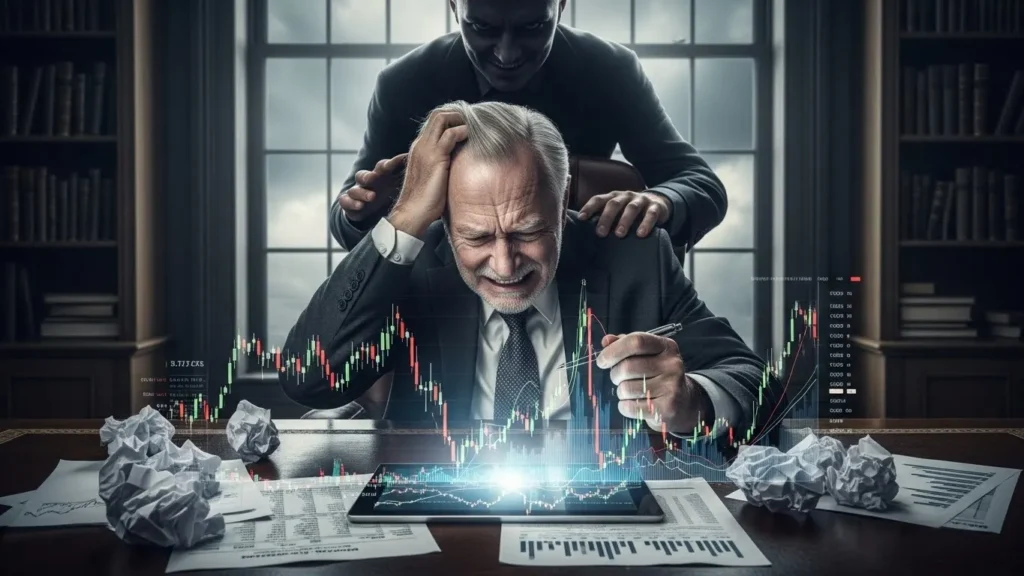
Why Emotional Reactions Hurt Investment Results
The market drops suddenly.
Your phone buzzes.
News headlines turn dramatic.
Charts flash red.
Before logic has time to speak, emotion steps in.
Fear whispers, “Get out before it gets worse.”
Greed follows later, saying, “You’re missing out—buy now.”
Most investors believe poor results come from bad investments.
In reality, they come from emotional reactions to normal market movement.
This invisible behavior gap is one of the most expensive mistakes in investing—and almost no one talks about it clearly.
Why Emotions Feel Helpful (But Aren’t)
Emotions evolved to keep us safe.
Fear helped humans avoid danger.
Excitement pushed us toward opportunity.
The problem?
Financial markets aren’t predators or food sources.
They’re probability-driven systems.
Your brain reacts to market movement the same way it reacts to physical threats—fast, emotional, and instinctive.
But successful investing requires:
- Patience
- Delayed gratification
- Probabilistic thinking
Exactly the opposite of emotional reflexes.
The Two Emotions That Hurt Investors the Most
While many emotions influence money decisions, two dominate investment behavior:
Fear
- Triggers panic selling
- Amplifies short-term losses
- Turns temporary declines into permanent damage
Greed
- Triggers chasing hot assets
- Encourages buying near peaks
- Leads to overconfidence and excess risk
Markets move in cycles.
Emotions exaggerate those cycles inside your head.
Real-Life Example: The Same Market, Two Outcomes
Imagine two investors during a market downturn.
Investor A (Emotion-Driven):
- Watches the portfolio daily
- Feels anxious as prices fall
- Sells to “stop the bleeding”
- Misses the recovery
Investor B (Process-Driven):
- Reviews periodically
- Understands volatility is normal
- Sticks to a plan
- Benefits when markets rebound
Same market.
Same assets.
Completely different results—because of emotional control.
What Behavioral Finance Reveals About Emotional Investing
Decades of behavioral finance research reveal a consistent pattern:
Investors often earn less than the investments they own.
Why?
Because:
- They buy high during excitement
- Sell low during fear
- Overreact to short-term noise
- Underreact to long-term fundamentals
This gap between market returns and investor returns is known as the behavior gap—and emotions are the main cause.
Loss Aversion: Why Losses Feel Worse Than Gains Feel Good
Psychological studies show that:
- Losses feel about twice as painful as gains feel pleasurable
This explains why:
- A small drop causes panic
- A similar gain barely brings satisfaction
- Investors act to “avoid pain,” not maximize returns
Loss aversion pushes people to:
- Sell too early
- Hold too much cash
- Avoid healthy risk altogether
Ironically, this often increases long-term risk.
Emotional Investing vs. Disciplined Investing (Comparison Table)
| Aspect | Emotional Investing | Disciplined Investing |
|---|---|---|
| Decision Trigger | Fear or excitement | Predefined rules |
| Time Horizon | Short-term | Long-term |
| Reaction to Volatility | Panic or overconfidence | Neutral assessment |
| Trading Frequency | High | Low |
| Long-Term Results | Often weaker | Often stronger |
| Stress Level | High | Low |
Why This Problem Is Bigger Today Than Ever
Emotional investing isn’t new—but it’s amplified today.
Why?
- 24/7 financial news
- Real-time price updates
- Social media hype and panic
- Constant comparisons with others
Your brain is exposed to continuous emotional stimulation, even when no action is needed.
This environment rewards reaction—not reflection.
Common Emotional Mistakes Investors Make
These patterns appear across all income and education levels:
- Selling after sharp drops instead of reviewing fundamentals
- Buying trending assets without understanding them
- Constantly changing strategies
- Trying to “time” the market repeatedly
- Confusing activity with progress
None of these improve returns.
They simply increase emotional fatigue.
Why This Matters Today (And Always Will)
Markets will always fluctuate.
Uncertainty will never disappear.
Technology will only make information louder.
The investors who succeed aren’t those who predict markets—but those who manage their reactions to markets.
Emotional discipline is now one of the most valuable financial skills.
How to Reduce Emotional Reactions Without Ignoring Reality
You don’t need to suppress emotions.
You need systems that limit their influence.
Practical, Proven Strategies:
- Create a written investment plan
- Decisions made calmly outperform decisions made emotionally
- Limit portfolio checks
- Monthly or quarterly is enough for most long-term goals
- Automate contributions
- Removes timing anxiety
- Focus on goals, not headlines
- Markets move; goals stay stable
- Reframe volatility
- It’s the price of long-term growth, not a flaw
A Simple Question That Stops Emotional Decisions
Before acting, ask:
“Has anything fundamentally changed—or am I reacting to noise?”
If it’s noise, pause.
Time is often the best filter.
Hidden Tip: Emotions Peak Before Mistakes
Strong emotions are a warning sign—not a signal.
If you feel:
- Urgent
- Anxious
- Euphoric
- Desperate to act
That’s usually the moment to slow down, not speed up.
Frequently Asked Questions
1. Are emotions always bad for investing?
No—but acting on them impulsively is. Awareness without reaction is the goal.
2. Can professionals avoid emotional investing?
Even professionals struggle. Systems and rules—not intelligence—reduce emotional impact.
3. Is emotional investing worse during volatile markets?
Yes. Volatility increases emotional intensity, making discipline more important than ever.
4. Does long-term investing eliminate emotions?
No, but it reduces how often emotions influence decisions.
5. What’s the fastest way to improve emotional discipline?
Reducing how often you check markets is one of the most effective steps.
Key Takeaways
- Emotional reactions are one of the biggest drags on investment returns
- Fear and greed drive most poor investment decisions
- The behavior gap explains why investors underperform their own investments
- Discipline beats prediction over time
- Managing emotions matters more than finding “perfect” investments
A Calm, Honest Conclusion
Investing success isn’t about being fearless.
It’s about being steady.
When you separate feelings from decisions, you give your investments time to work—and give yourself peace in the process.
In the long run, calm isn’t passive.
It’s powerful.
Disclaimer: This article is for educational purposes only and should not be considered personalized financial advice. Always align investment decisions with your individual goals and risk tolerance.

Selina Milani is a personal finance writer focused on clear, practical guidance on money, taxes, insurance, and investing. She simplifies complex decisions with research-backed insights, calm clarity, and real-world accuracy.


Pingback: How Uncertainty Affects Investor Behaviour — Why Not Knowing What’s Next Changes How We Think About Money
Pingback: The Psychological Cost of Market Noise — How Constant Financial Signals Quietly Damage Decisions and Peace of Mind
Pingback: The Hidden Risk of Overconfidence in Investing: Why Confidence Often Destroys Returns Before Markets Do
Pingback: The Cost of Chasing Investment Certainty — Why Wanting to Feel Safe Can Quietly Make You Poorer
Pingback: Why Market Volatility Feels Worse Than It Is — The Psychological Trap That Makes Normal Swings Feel Like Danger
Pingback: How Money Stress Impacts Relationships (And Why It Shows Up as Conflict, Distance, or Silence)
Pingback: Why Investors Fear Losses More Than Missed Gains (The Bias That Quietly Shapes Every Decision)