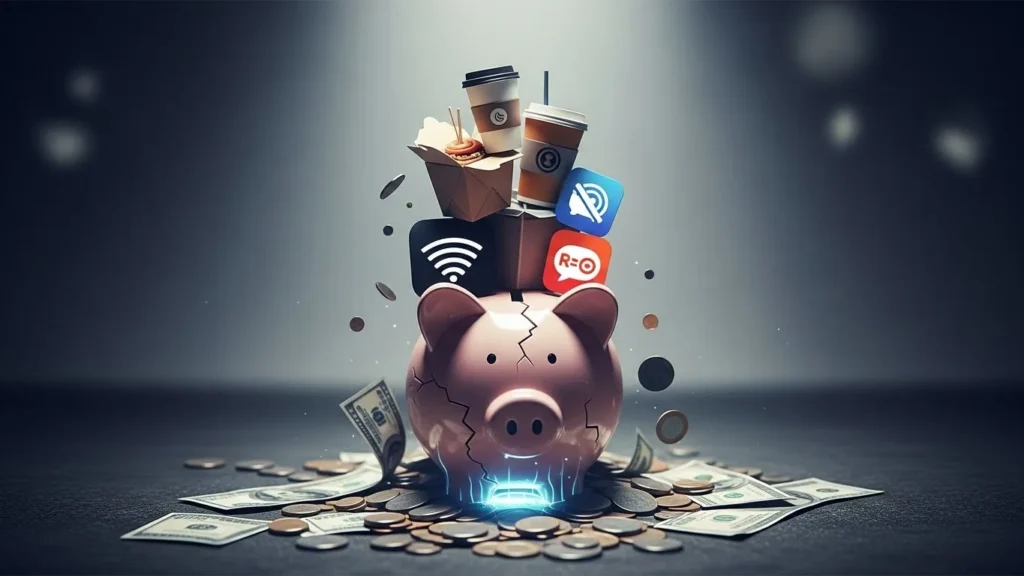
The Purchases That Don’t Feel Like Spending
You didn’t decide to spend money.
You just tapped a button.
Ordered food.
Renewed a subscription.
Paid extra to save time.
No guilt.
No hesitation.
No sense of loss.
That’s the magic—and danger—of convenience spending.
It doesn’t feel like spending at all. And that’s exactly why it quietly becomes one of the most expensive habits in modern life.
Why This Matters Today (Even If You’re “Careful” With Money)
We live in a world designed for frictionless spending:
- One-click purchases
- Auto-renew subscriptions
- Cashless payments
- Instant delivery
- On-demand everything
Convenience has never been easier—or more expensive.
Not because each purchase is huge.
But because frequency replaces intention.
And small, repeated costs quietly reshape your finances.
What Is Convenience Spending, Really?
Convenience spending is money spent primarily to save:
- Time
- Effort
- Mental energy
- Discomfort
Examples include:
- Food delivery instead of cooking
- Ride-hailing instead of public transport
- Paying premiums for speed or ease
- Buying pre-packaged solutions over DIY
- Keeping unused subscriptions “just in case”
None of these are bad on their own.
The issue is unexamined accumulation.
Why Convenience Spending Feels So Harmless
Your brain doesn’t process convenience purchases like traditional spending.
Why?
Because:
- There’s no physical cash leaving your hand
- The cost is usually “small enough”
- The benefit is immediate
- The pain is delayed or invisible
The brain registers relief, not expense.
And relief is addictive.
The Psychology Behind “Just This Once”
Convenience spending thrives on rationalizations:
- “I’m too tired today”
- “I deserve this”
- “It’s only a few dollars”
- “I’ll make up for it later”
Individually, these thoughts are reasonable.
Repeated daily, they become expensive.
The Compounding Cost You Rarely Calculate
Let’s look at a simple example:
- ₹300 food delivery, 3× a week
- That’s ~₹3,600 per month
- ~₹43,000 per year
Add:
- Unused subscriptions
- Premium services
- Faster shipping fees
- App-based impulse buys
Suddenly, convenience isn’t small.
It’s structural.
Convenience vs Intentional Spending
| Convenience Spending | Intentional Spending |
|---|---|
| Automatic | Conscious |
| Emotion-driven | Value-driven |
| Frequent | Selective |
| Hard to track | Easy to review |
| Feels painless | Feels deliberate |
The danger isn’t spending for ease.
It’s spending without awareness.
Real-Life Example: The “Busy Professional” Trap
A professional works long hours.
They rely on:
- Daily takeout
- Ride apps
- Multiple subscriptions
- Quick online purchases
Income is decent.
Savings feel… thin.
When reviewed:
- No single expense looks excessive
- Combined convenience costs exceed rent increase
- Financial stress persists despite earning more
The problem wasn’t income.
It was invisible leakage.
Why Convenience Spending Increases Over Time
Convenience spending rarely stays flat.
It grows because:
- Habits normalize
- Tolerance increases
- Lifestyle expectations rise
- Effort avoidance compounds
What once felt like a treat becomes baseline.
That’s how convenience turns into lifestyle inflation—quietly.
The Emotional Cost Nobody Talks About
Beyond money, convenience spending affects:
- Awareness
- Gratitude
- Decision confidence
- Sense of control
When everything is automated:
- You lose touch with costs
- Spending feels abstract
- Financial anxiety increases
- Money feels harder to manage
Ironically, convenience meant to reduce stress can create more of it.
Mistakes That Make Convenience Spending Worse
Common traps include:
- ❌ Not reviewing subscriptions regularly
- ❌ Treating delivery as default, not exception
- ❌ Using convenience to cope with stress
- ❌ Ignoring “small” recurring costs
- ❌ Assuming time saved always equals value
Convenience without boundaries becomes expensive fast.
When Convenience Is Worth Paying For
Not all convenience spending is bad.
It is worth it when it:
- Protects health or energy
- Frees time for higher-value work
- Prevents burnout
- Supports long-term productivity
The key question isn’t “Is this convenient?”
It’s “Is this intentionally chosen?”
A Simple Test to Evaluate Convenience Spending
Before paying for convenience, ask:
- What problem am I solving?
- Is this occasional or habitual?
- Would I choose this if it weren’t automatic?
- What am I trading—money, awareness, skills?
If you can answer calmly, it’s likely a good choice.
How to Reduce the Hidden Price Without Losing Comfort
1. Design “Convenience Windows”
Allow convenience—but limit it.
Examples:
- Delivery only on weekends
- Ride apps only after late hours
- Premium services for specific use cases
Boundaries protect freedom.
2. Audit Subscriptions Quarterly
Ask:
- Do I actively use this?
- Does it add real value?
- Would I re-subscribe today?
Cancel without guilt.
3. Reintroduce Small Friction (On Purpose)
Friction creates awareness.
- Remove saved cards from apps
- Disable one-click checkout
- Turn off auto-renew
A pause often prevents unnecessary spending.
4. Replace Some Convenience With Preparation
Preparation is cheaper than convenience.
- Meal planning
- Batch cooking
- Advance scheduling
- Simple routines
Preparation trades time once instead of money repeatedly.
Why Awareness Alone Changes Spending Behavior
Most people don’t need stricter rules.
They need visibility.
Once you see how much convenience costs:
- Decisions feel lighter
- Guilt decreases
- Control increases
Awareness restores choice.
Long-Term Impact of Reducing Convenience Spending
People who rebalance convenience often notice:
- Faster savings growth
- Lower monthly leakage
- More confidence with money
- Less financial anxiety
- Greater appreciation for chosen luxuries
You don’t lose comfort.
You gain control.
Key Takeaways
- Convenience spending feels painless but compounds quietly
- Small, frequent costs matter more than large, rare ones
- Automation reduces awareness—not just effort
- Convenience is valuable when chosen intentionally
- Simple boundaries protect both money and peace
- Awareness is more powerful than restriction
Frequently Asked Questions
1. Is convenience spending always bad?
No. It becomes costly only when habitual and unexamined.
2. How do I know if convenience is worth the cost?
If it clearly saves time, energy, or stress—and you choose it consciously—it’s likely worth it.
3. Are subscriptions the biggest problem?
They’re a major contributor because they’re easy to forget and hard to feel.
4. Will reducing convenience lower my quality of life?
Often the opposite—intentional convenience feels more satisfying.
5. How often should I review convenience spending?
Every 2–3 months is usually enough to stay aware.
A Calm Final Thought
Convenience isn’t the enemy.
Unnoticed convenience is.
When you slow down just enough to see where ease is costing you, money stops slipping away quietly—and starts working with intention again.
Comfort doesn’t disappear.
It simply becomes a choice.
Disclaimer: This article is for general informational purposes only and is not a substitute for personalized financial advice.

Selina Milani is a personal finance writer focused on clear, practical guidance on money, taxes, insurance, and investing. She simplifies complex decisions with research-backed insights, calm clarity, and real-world accuracy.


Pingback: Why Small Money Decisions Matter More Than Big Ones — The Quiet Financial Force Most People Ignore