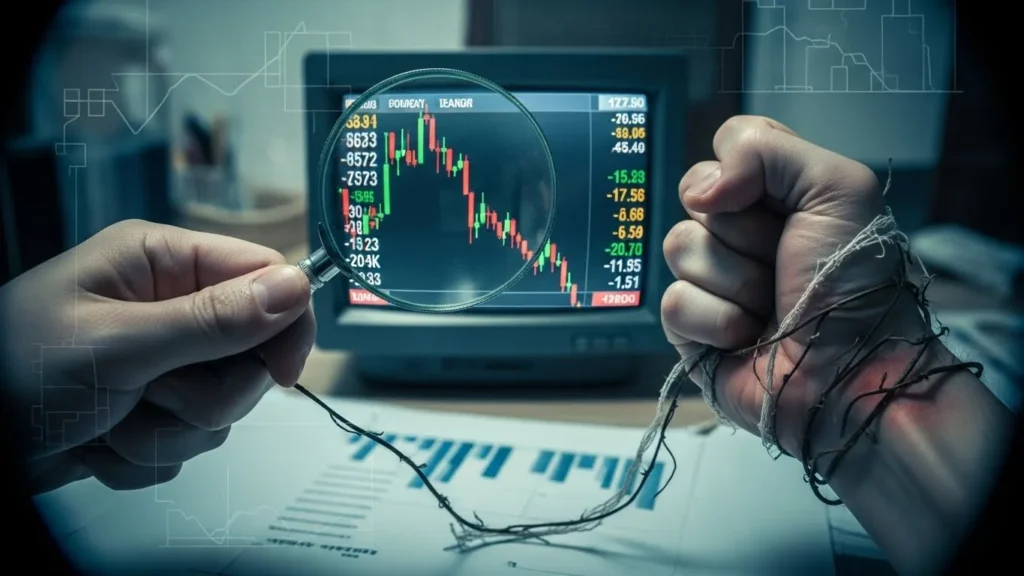
The Hidden Cost of Over monitoring Investments
You open your phone.
Markets are down.
Again.
Your stomach tightens—not because your long-term plan changed, but because you saw the number change.
You refresh.
You scroll.
You check another app.
Nothing productive happens—but your mood, focus, and confidence quietly take a hit.
This is the hidden cost of overmonitoring investments.
Not fees. Not taxes.
Mental bandwidth. Emotional stability. Decision quality.
And most investors don’t realize they’re paying it every single day.
Why Overmonitoring Feels Responsible (But Isn’t)
At first glance, constant checking feels smart.
You tell yourself:
- “I’m staying informed.”
- “I need to be alert.”
- “What if something goes wrong?”
The problem?
Modern investing tools were designed for engagement, not for long-term decision-making.
Markets move every second.
Your brain was never built to process that much financial noise without stress.
Overmonitoring creates the illusion of control—without delivering real control.
What Overmonitoring Actually Does to Your Brain
The human brain treats losses differently than gains.
A small dip feels more intense than an equivalent rise feels good.
When you monitor investments frequently:
- You experience loss signals more often
- Stress hormones spike
- Rational thinking declines
- Impulsive decisions increase
Behavioral finance research consistently shows that investors who check portfolios daily are more likely to trade emotionally—even when nothing fundamentally changed.
The “Anxiety Tax” Most Investors Never Calculate
There’s a silent tax on overmonitoring.
Not measured in rupees or dollars—but in outcomes.
It shows up as:
- Selling too early
- Hesitating to invest more
- Constant second-guessing
- Poor sleep and distraction
- Reduced confidence in good strategies
Over time, this anxiety tax compounds—just like money does.
But in the opposite direction.
A Simple Example: Two Investors, Same Portfolio
Investor A
- Checks portfolio multiple times a day
- Reacts to short-term drops
- Moves in and out frequently
Investor B
- Reviews quarterly
- Follows a clear plan
- Ignores daily noise
Same assets.
Same markets.
After years, Investor B usually ends up with:
- Higher net returns
- Fewer fees
- Better emotional health
- Stronger discipline
The difference wasn’t intelligence.
It was attention.
Why This Problem Is Worse Today Than Ever Before
Overmonitoring wasn’t common decades ago.
Why?
Because access was limited.
Today:
- Apps send alerts
- News runs 24/7
- Social media amplifies panic
- Market commentary never sleeps
Your brain gets exposed to constant urgency, even when urgency isn’t required.
This creates a false sense that doing nothing is dangerous—when often, it’s the smartest move.
Overmonitoring vs. Intentional Investing (Comparison Table)
| Aspect | Overmonitoring Investing | Intentional Investing |
|---|---|---|
| Check Frequency | Daily / hourly | Monthly / quarterly |
| Emotional State | Anxious, reactive | Calm, deliberate |
| Decision Style | Impulsive | Planned |
| Trading Costs | Higher | Lower |
| Long-Term Returns | Often reduced | Often stronger |
| Mental Load | High | Low |
The Hidden Link Between Overmonitoring and Lower Returns
Frequent monitoring leads to frequent action.
Frequent action leads to:
- Higher transaction costs
- Poor timing decisions
- Performance chasing
- Loss aversion errors
Studies repeatedly show that the more often investors trade, the worse their average returns tend to be.
Ironically, the investors who “do less” often achieve more.
Mistakes Overmonitors Commonly Make
Here are patterns seen again and again:
- Selling after a dip instead of reassessing fundamentals
- Buying after rallies due to fear of missing out
- Constantly switching strategies
- Ignoring long-term goals for short-term comfort
None of these are intelligence problems.
They’re exposure problems.
Why This Matters Today (And Always Will)
Technology will always make movement more visible.
But your goals—retirement, security, freedom—exist on a longer timeline than daily charts.
Learning to manage attention is now as important as managing money.
Those who master this skill protect both:
- Their capital
- Their peace of mind
How to Reduce Overmonitoring Without Feeling Out of Control
You don’t need to disconnect completely.
You need structure.
Practical, Proven Steps:
- Set a review schedule
- Monthly or quarterly is enough for most investors
- Disable unnecessary alerts
- Price alerts rarely help long-term decisions
- Define rules in advance
- Write down when you will take action
- Focus on progress, not prices
- Contributions, diversification, consistency
- Replace checking with learning
- Read fundamentals instead of refreshing apps
A Calm Rule That Changes Everything
Ask yourself one question before checking:
“Will seeing this number change a planned decision today?”
If the answer is no—don’t look.
This single habit reduces emotional noise dramatically.
Hidden Tip: Track Time, Not Prices
Instead of tracking market movement, track:
- How long you stayed invested
- How consistently you contributed
- How closely you followed your plan
These are the variables that actually build wealth.
Frequently Asked Questions
1. How often should I check my investments?
For long-term investors, monthly or quarterly reviews are usually sufficient unless your situation changes.
2. Is overmonitoring worse during volatile markets?
Yes. Volatility increases emotional reactions, making overmonitoring especially harmful during uncertain periods.
3. Does overmonitoring mean I’m a bad investor?
Not at all. It means you’re human—and exposed to too much information too often.
4. Can automation help reduce overmonitoring?
Yes. Automatic investing and rebalancing reduce the urge to constantly intervene.
5. What if I enjoy tracking markets?
Enjoy learning—but separate education from decision-making. Don’t confuse awareness with action.
Key Takeaways
- Overmonitoring investments creates stress without improving outcomes
- Frequent checking increases emotional decision-making
- Long-term success depends more on discipline than attention
- Structured review schedules protect both returns and mental health
- Doing less can be the smartest investing move
A Simple, Honest Conclusion
Watching your investments too closely doesn’t make you safer.
It makes you noisier inside.
The most successful investors aren’t glued to screens—they’re grounded in plans.
When you give your money room to breathe, you often give yourself the same freedom.
Disclaimer: This article is for educational purposes only and does not constitute financial advice. Investment decisions should be based on individual goals and risk tolerance.

Selina Milani is a personal finance writer focused on clear, practical guidance on money, taxes, insurance, and investing. She simplifies complex decisions with research-backed insights, calm clarity, and real-world accuracy.
Pingback: How Uncertainty Affects Investor Behaviour — Why Not Knowing What’s Next Changes How We Think About Money
Pingback: Why Long-Term Investors Still Make Short-Term Mistakes — The Hidden Psychology That Trips Up Even Disciplined Plans
Pingback: Why Emotional Discipline Matters More Than Strategy: The Quiet Skill That Separates Winning Investors From the Rest
Pingback: How Information Overload Harms Investors: Why More Data Is Quietly Making Decisions Worse
Pingback: Why Market Volatility Feels Worse Than It Is — The Psychological Trap That Makes Normal Swings Feel Like Danger