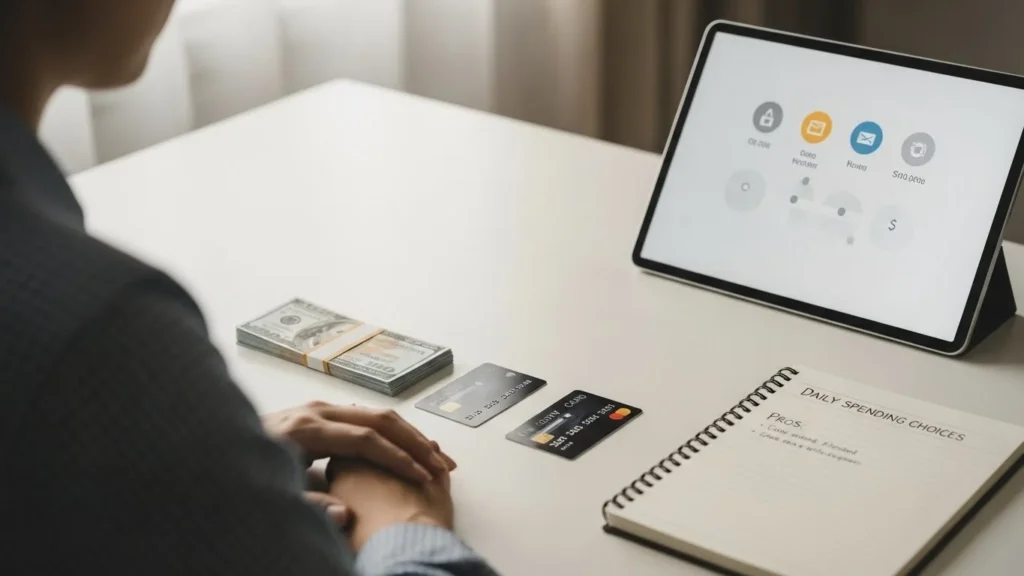
“A Small Choice You Make Every Day — With Bigger Effects Than You Realize”
You’re standing at the checkout counter.
Groceries scanned. Total flashes on the screen.
Without thinking much, your hand reaches for cash, credit, or debit.
It feels like a minor decision. Almost automatic.
But in my experience working with individuals and business owners across different income levels, this small daily choice quietly shapes:
- How much you spend
- How aware you feel about money
- How much friction exists between intention and action
Most people ask, “Which is better?”
The more useful question is: “Better for what—and for whom?”
This guide breaks it down calmly, clearly, and practically—so you can choose the right tool for the right moment.
Why This Question Matters More Today Than Ever
Daily spending has changed.
We tap phones.
We auto-pay subscriptions.
We rarely see money leave our hands.
That convenience is powerful—but it also blurs awareness.
The payment method you use influences:
- Spending speed
- Emotional pain (or lack of it) when paying
- Your ability to track and adjust behavior
I’ve seen people earn very different outcomes—not because of income, but because of how they interact with money daily.
Let’s look at each option honestly.
Cash: The Most Honest Spending Tool (With Real Limits)
Cash is simple.
You hand over physical money.
It’s gone.
There’s no delay, no abstraction.
That immediacy matters.
Why Cash Still Works So Well
Cash creates friction, and friction isn’t bad.
It:
- Makes spending feel real
- Slows impulsive purchases
- Naturally caps how much you can spend
Many people notice they spend less when using cash—not because they try harder, but because the process itself encourages restraint.
Where Cash Shines
Cash is particularly effective for:
- Daily discretionary spending
- Tight budgets
- Resetting poor spending habits
- Teaching spending awareness
I’ve often seen clients regain control simply by switching to cash for a few weeks.
The Trade-Offs of Cash
Cash isn’t perfect.
Limitations include:
- No spending record
- Risk of loss or theft
- Inconvenient for online purchases
- No built-in protections
Cash is honest—but not always practical.
Debit Cards: Convenience With Immediate Consequences
Debit cards feel modern, fast, and safe.
You swipe or tap—and money leaves your account immediately.
Why Debit Feels Comfortable
Debit cards sit between cash and credit.
They offer:
- Real-time balance impact
- Ease of use
- Digital transaction records
- Wide acceptance
For many people, debit feels “responsible” because you’re using your own money.
The Hidden Risk Most People Miss
Here’s what’s often overlooked:
Debit removes physical friction without removing spending impact.
Because the money isn’t tangible, it’s easy to overspend—especially on small, repeated purchases.
Common patterns I see:
- “It’s only $8” repeated many times
- Balance checks becoming infrequent
- Spending awareness fading quietly
When Debit Works Best
Debit is ideal for:
- Predictable daily expenses
- People who track balances regularly
- Those who prefer simplicity without borrowing
It’s a strong default—if awareness stays intact.
Credit Cards: Powerful Tools That Demand Discipline
Credit cards are the most misunderstood option.
They’re often framed as dangerous—or magical.
In reality, they’re amplifiers.
Why Credit Cards Can Be Useful
Used intentionally, credit cards offer:
- Short-term cash flow flexibility
- Purchase protections
- Spending categorization
- Rewards and benefits
They can smooth expenses and simplify tracking.
The Psychological Catch
Credit cards delay pain.
You spend now.
You feel it later.
This separation is subtle—but powerful.
In real life, this often leads to:
- Higher average spending
- Larger impulse purchases
- Underestimating monthly totals
It’s not about willpower.
It’s about human psychology.
Who Credit Works Best For
Credit cards tend to work best for people who:
- Pay balances in full
- Review statements regularly
- Use cards strategically—not emotionally
Without those habits, credit becomes expensive—not financially alone, but mentally.
Cash vs Credit vs Debit: A Clear Comparison
Here’s a simple side-by-side view:
| Feature | Cash | Debit Card | Credit Card |
|---|---|---|---|
| Spending Awareness | Very High | Medium | Low |
| Ease of Use | Low–Medium | High | High |
| Overspending Risk | Low | Medium | High |
| Transaction Records | None | Yes | Yes |
| Online Use | No | Yes | Yes |
| Purchase Protection | No | Limited | Strong |
| Best For | Control & reset | Daily expenses | Planned spending |
No winner.
Just different strengths.
The Hidden Insight Most People Miss
The best payment method is rarely one option.
It’s a system.
In my experience, people who feel calm and confident with money often use:
- Cash for discretionary spending
- Debit for routine necessities
- Credit for planned, trackable expenses
They don’t debate morality.
They design behavior.
Common Mistakes That Quietly Cost More
These patterns show up repeatedly:
- Using credit for emotional spending
- Using debit without checking balances
- Avoiding cash because it feels “old-fashioned”
- Mixing methods without intention
None of these are failures.
They’re defaults.
And defaults shape outcomes.
How to Choose the Right Method for You
Ask yourself three simple questions:
- Where do I overspend most often?
- Do I review transactions weekly?
- Do I feel surprised by balances?
Your answers point directly to the best tool.
Practical Starting Points
- Struggling with impulse buys? Try cash.
- Want simplicity? Debit with regular check-ins.
- Value tracking and protections? Credit—with structure.
You can adjust over time.
Nothing here is permanent.
Why This Choice Affects More Than Money
Daily spending decisions influence:
- Stress levels
- Confidence
- Sense of control
- Financial clarity
When the method matches your behavior, money feels quieter.
That calm matters.
Key Takeaways
- No single method is “best” for everyone
- Cash increases awareness and restraint
- Debit offers convenience with real-time impact
- Credit amplifies habits—good or bad
- The smartest approach is intentional combination
- Design behavior, not perfection
Frequently Asked Questions
Is using cash outdated today?
Not at all. Cash remains one of the most effective tools for awareness and control.
Is debit safer than credit for daily spending?
It depends. Debit limits borrowing, but still requires active tracking.
Should I avoid credit cards entirely?
Not necessarily. They work well when used deliberately and reviewed regularly.
Can switching payment methods really change spending?
Yes. Payment psychology plays a bigger role than most people realize.
Is one method better for budgeting?
Cash and debit tend to support budgeting more naturally for most people.
A Simple Conclusion
Cash, credit, and debit aren’t rivals.
They’re tools.
When you stop asking “Which is best?” and start asking “Which fits this moment?”, money becomes calmer, clearer, and easier to manage.
That shift—more than any app or system—is where real progress begins.
Disclaimer: This article is for general informational purposes only and reflects practical observations, not personalized financial advice.

Selina Milani is a personal finance writer focused on clear, practical guidance on money, taxes, insurance, and investing. She simplifies complex decisions with research-backed insights, calm clarity, and real-world accuracy.


Pingback: How to Avoid Bank Fees — The Quiet Money Leaks Most People Never Notice (And How to Stop Them)