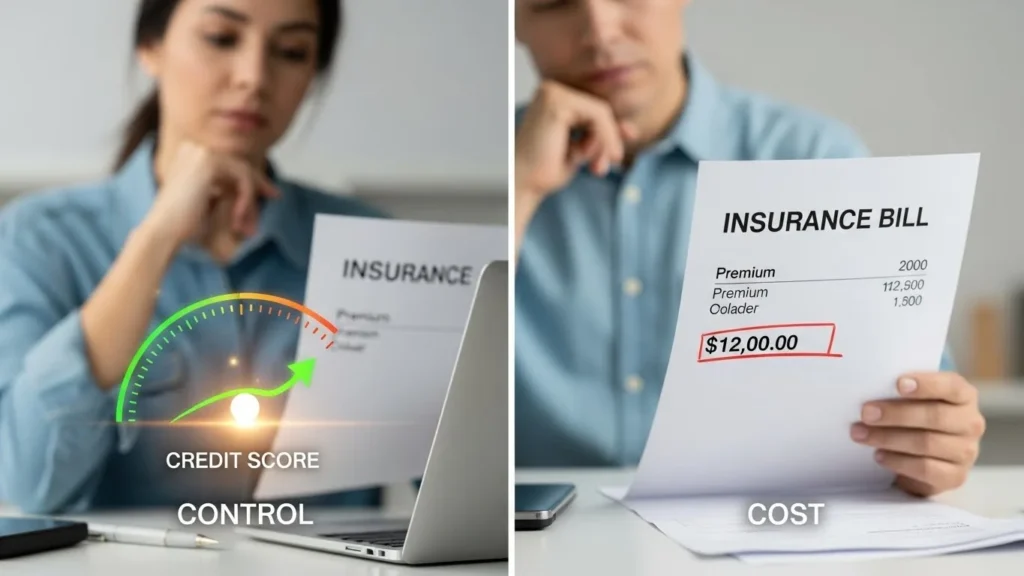
The Bill That Makes You Pause
You renew your insurance.
Nothing has changed.
No claims.
No accidents.
No damage.
Yet the premium is higher.
You scan the document again.
Coverage looks the same.
Deductibles unchanged.
So what moved?
👉 For many people, the answer isn’t driving, health, or risk behavior — it’s credit score–based pricing happening quietly in the background.
This connection surprises people because it’s rarely explained clearly — yet it affects millions of policyholders.
Why This Topic Matters More Than You Think
Most people treat credit scores as a borrowing issue.
Loans.
Credit cards.
Mortgages.
Insurance feels separate.
But in many markets, insurers use a credit-based insurance score as part of their pricing models.
Not to judge character.
Not to punish mistakes.
But to estimate risk, using patterns drawn from massive data sets.
Understanding this connection gives you leverage — and prevents confusion, frustration, and unnecessary overpaying.
What Insurers Actually Mean by “Credit Score”
Important clarification:
Insurers don’t usually use your exact consumer credit score the same way banks do.
Instead, they use a credit-based insurance score, built from similar data, but weighted differently.
These models focus on:
- Payment history
- Outstanding balances
- Credit utilization
- Length of credit history
- Frequency of new credit
They do not consider:
- Income
- Job title
- Marital status
- Race or religion
The goal isn’t morality — it’s predictability.
Why Credit Behavior Is Linked to Insurance Risk
This is the part people push back on.
“What does paying a bill late have to do with accidents or claims?”
From an insurer’s perspective, long-term data shows patterns:
- People who manage credit consistently tend to file fewer claims
- They’re more likely to maintain assets carefully
- They’re statistically less likely to submit high-frequency claims
This is correlation, not judgment.
Insurers price risk using probabilities — not personal stories.
How Credit Scores Influence Different Types of Insurance
The impact varies by product.
Auto Insurance
Credit-based scoring is commonly used to:
- Adjust base premium
- Determine pricing tiers
- Influence eligibility for preferred plans
Drivers with stronger credit histories often receive lower rates — even with identical driving records.
Home Insurance
Credit data may influence:
- Premium levels
- Deductible options
- Renewal terms
Homes represent high-value risk, so insurers rely on multiple data signals.
Renters & Other Policies
The effect may be smaller — but still present.
The key point: credit doesn’t replace risk factors — it supplements them.
Real-Life Example: Same Risk, Different Cost
Consider two people:
Same city
Same car
Same driving history
Same coverage
The difference?
- Person A: Consistent credit payments, low utilization
- Person B: Missed payments, high balances
Over time, Person B may pay noticeably more — without ever filing a claim.
This isn’t always obvious because it’s rarely highlighted on the policy summary.
What Hurts Your Insurance Pricing the Most
Not all credit behavior affects premiums equally.
High-impact factors often include:
- Late or missed payments
- High credit utilization
- Multiple collections
- Frequent credit applications
- Recent financial distress signals
One missed payment won’t ruin you.
Patterns matter more than isolated events.
Comparison Table: Credit Profile vs Insurance Impact
| Credit Behavior | Likely Insurance Impact |
|---|---|
| On-time payments | Lower risk rating |
| Low credit utilization | More stable pricing |
| Long credit history | Positive weighting |
| Multiple late payments | Higher premiums |
| High revolving debt | Increased risk score |
This table reflects trends — not guarantees.
The Mistakes People Make After Learning This
Once people hear about the connection, they often overreact.
Common mistakes:
- Closing old accounts impulsively
- Applying for multiple new cards quickly
- Avoiding credit entirely
- Ignoring utilization ratios
These actions can hurt credit-based insurance scores, even when done with good intentions.
Actionable Ways to Reduce Insurance Costs via Credit Health
You don’t need perfection.
You need stability.
Focus on:
- Paying all bills on time (even minimums)
- Keeping credit utilization below 30%
- Avoiding unnecessary credit applications
- Letting accounts age naturally
- Checking credit reports for errors
These steps help loans and insurance — a rare double benefit.
Why This Matters Today (And Going Forward)
Insurance pricing is becoming more data-driven.
As models evolve, behavioral consistency matters more than one-time events.
Understanding how insurers see risk allows you to:
- Anticipate changes
- Ask better questions
- Avoid confusion at renewal time
- Make informed financial decisions
This isn’t about fear.
It’s about clarity.
What Insurers Are Not Allowed to Do
To build trust, it’s important to know the limits.
Insurers generally cannot use:
- Personal beliefs
- Health diagnoses
- Income levels
- Demographic discrimination
Credit-based models are regulated and monitored — even if they feel opaque.
Key Takeaways
- Credit scores can influence insurance premiums quietly
- Insurers use credit-based insurance scores, not moral judgment
- Patterns matter more than isolated mistakes
- Good credit habits reduce costs beyond borrowing
- Awareness gives you pricing power
Frequently Asked Questions
1. Can improving my credit lower my insurance premium?
Often yes, especially at renewal or when shopping for a new policy.
2. Do insurers check credit every year?
Some do at renewal; others review periodically or during underwriting changes.
3. Does checking my credit hurt my insurance score?
No. Soft checks and personal reviews do not affect scoring.
4. Is this practice allowed everywhere?
Rules vary by region and policy type, but it’s widely regulated.
5. Should I avoid credit entirely to lower insurance costs?
No. Responsible credit use is usually better than no credit history.
A Calm, Practical Conclusion
Insurance pricing isn’t just about accidents or claims.
It’s about patterns of responsibility and predictability.
Your credit behavior sends quiet signals — not just to lenders, but to insurers too.
You don’t need to obsess.
You don’t need perfection.
Just steady, consistent habits that protect you across every part of your financial life.
Disclaimer: This article is for general educational purposes only and does not constitute personalized financial or insurance advice.

Selina Milani is a personal finance writer focused on clear, practical guidance on money, taxes, insurance, and investing. She simplifies complex decisions with research-backed insights, calm clarity, and real-world accuracy.