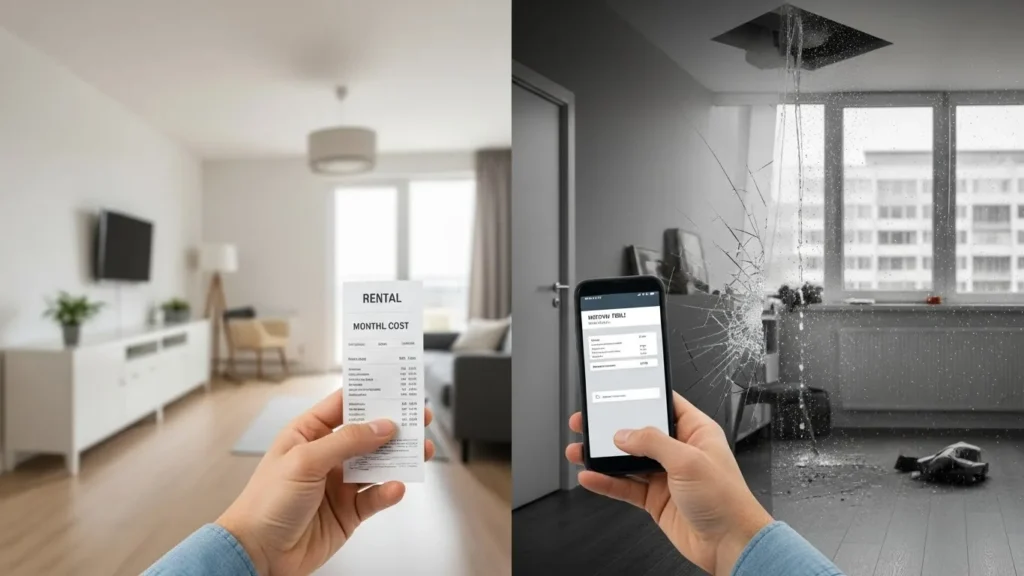
The Assumption Almost Every Renter Makes
When you rent a home, it’s easy to assume you’re covered.
There’s a landlord.
There’s a lease.
There’s a building owner with insurance.
So if something goes wrong, surely someone else handles it… right?
👉 This is where many renters face a painful surprise.
Your landlord’s insurance protects the building, not your belongings, and not your personal liability.
Renters insurance exists precisely to fill that gap — and it’s far more important than most renters realize.
Why This Matters More Than Renters Think
Renting often feels temporary.
You’re not tied down.
You didn’t buy the place.
You assume losses would be limited.
But renters often own:
- Electronics
- Furniture
- Clothing
- Appliances
- Personal valuables
Rebuilding those after a loss isn’t a small expense.
Without renters insurance, one unexpected event can quietly turn into a financial setback that takes years to recover from.
What Renters Insurance Actually Covers (In Plain Language)
Renters insurance isn’t complicated — but it’s widely misunderstood.
Most standard policies include three core protections:
1) Personal Property Coverage
This protects your belongings if they’re damaged or stolen due to events like:
- Fire or smoke
- Theft or burglary
- Water damage (non-flood)
- Vandalism
- Certain natural events
Your items are covered inside the apartment and often outside it, like stolen luggage or items in your car.
2) Personal Liability Protection
This is the most overlooked benefit.
It covers you if:
- Someone is injured in your rented space
- You accidentally damage someone else’s property
- A situation leads to legal or medical costs
Liability claims can be financially devastating — and they don’t care whether you own or rent.
3) Additional Living Expenses
If your rental becomes unlivable due to a covered event, this helps pay for:
- Temporary accommodation
- Meals
- Basic living costs
Without this, renters often pay out of pocket while still covering rent.
Real-Life Example Most Renters Don’t Expect
Imagine this scenario:
A small kitchen fire breaks out in your rented apartment.
The building is repaired by the landlord’s insurance.
But:
- Your furniture is destroyed
- Your electronics are damaged
- You need temporary housing
Without renters insurance:
👉 Every one of those costs is yours.
With renters insurance:
👉 Those losses are usually covered, often with a manageable deductible.
Same incident.
Completely different outcomes.
Why Renters Insurance Is Surprisingly Affordable
One of the biggest misconceptions is cost.
Many renters assume insurance will be expensive.
In reality, renters insurance is often one of the cheapest forms of coverage available.
Why?
- Lower risk than home insurance
- Smaller coverage amounts
- Fewer structural liabilities
For most renters, the cost is closer to a monthly subscription — not a major financial burden.
Comparison Table: With vs Without Renters Insurance
| Situation | Without Renters Insurance | With Renters Insurance |
|---|---|---|
| Theft | Replace items yourself | Items often reimbursed |
| Fire damage | Out-of-pocket losses | Covered belongings |
| Guest injury | Personal legal risk | Liability protection |
| Temporary housing | Paid by you | Often covered |
| Peace of mind | Constant uncertainty | Financial clarity |
The Most Common Reasons Renters Skip Insurance (And Why They’re Risky)
Let’s address the top reasons renters avoid coverage:
- “I don’t own much.”
Replacing “not much” still costs more than most expect. - “My landlord has insurance.”
That policy does not protect you or your belongings. - “Nothing will happen.”
Most claims come from ordinary accidents, not disasters. - “I’ll get it later.”
Insurance only works before something happens.
These assumptions are understandable — and costly.
Hidden Benefits Renters Rarely Hear About
Renters insurance offers quiet advantages beyond claims.
It can:
- Help with identity theft protection (in some policies)
- Make landlord approval easier
- Improve peace of mind during travel
- Support you during relocation emergencies
It’s not just about loss — it’s about stability when life is disrupted.
Mistakes Renters Make When Buying Renters Insurance
Even when renters buy insurance, mistakes happen:
- Underestimating the value of belongings
- Ignoring liability limits
- Choosing deductibles that are too high
- Not updating coverage after major purchases
A quick annual review prevents most of these issues.
How to Choose the Right Renters Insurance (Simple Checklist)
Before buying or renewing, ask:
- What total value of belongings do I need covered?
- Is replacement cost included or actual cash value?
- How much liability protection feels reasonable?
- Are my valuables adequately protected?
- What’s excluded?
Clarity matters more than complexity.
Why This Matters Today (And Always Will)
Renting is more common.
Living spaces are denser.
Belongings are more valuable.
Liability risks are higher.
Renters insurance isn’t about fear.
It’s about not letting a single incident undo years of financial progress.
Key Takeaways
- Landlord insurance does not protect renters’ belongings
- Renters insurance covers property, liability, and living expenses
- It’s often very affordable relative to the protection offered
- Most renters regret skipping it only after a loss
- A small monthly decision can prevent major financial stress
Frequently Asked Questions
1) Is renters insurance mandatory?
Usually no, but some landlords require it as part of the lease.
2) Does renters insurance cover roommates?
Typically no. Each renter should have their own policy unless specifically included.
3) Are expensive items covered?
Often yes, but high-value items may need additional coverage.
4) Does it cover floods or earthquakes?
Usually not by default. Separate coverage may be required.
5) Can I cancel renters insurance anytime?
Most policies allow cancellation, but coverage ends immediately.
A Simple, Honest Conclusion
Renters insurance isn’t about expecting the worst.
It’s about being prepared for the unexpected — without panic.
You may never need it.
And that’s exactly the point.
Because when something does go wrong, the goal isn’t to regret a small monthly cost.
It’s to be grateful you made a calm, smart decision when everything was still normal.
Disclaimer: This article is for general informational purposes only and does not replace personalized insurance advice.

Selina Milani is a personal finance writer focused on clear, practical guidance on money, taxes, insurance, and investing. She simplifies complex decisions with research-backed insights, calm clarity, and real-world accuracy.