The Mistakes That Don’t Hurt — Until They Do
Most people don’t fear small tax errors.
A missed deduction here.
A misclassified expense there.
A form filled slightly wrong.
Nothing breaks.
Nothing triggers panic.
Nothing feels urgent.
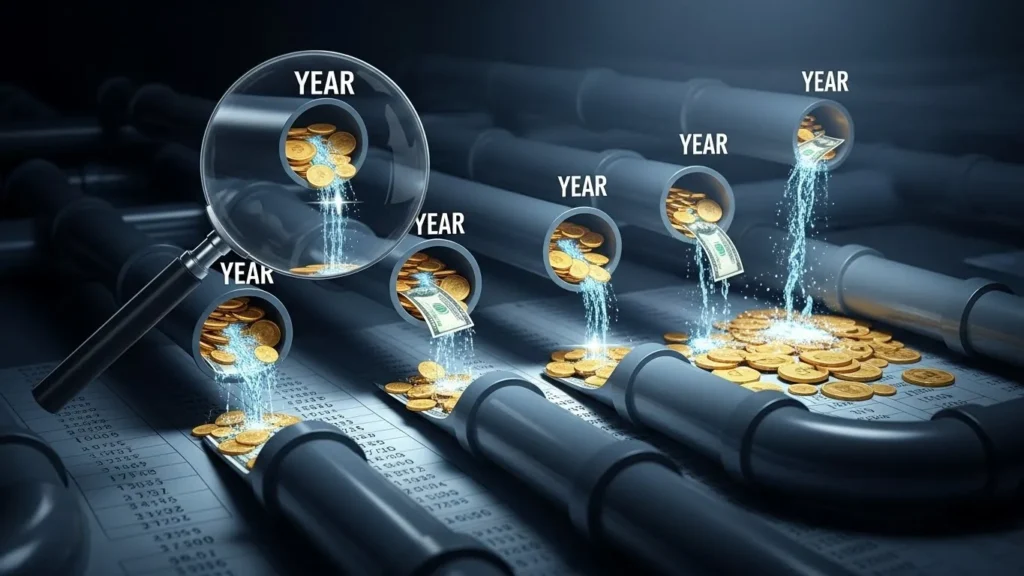
And that’s exactly why small tax errors compound over years — quietly, invisibly, and relentlessly.
Unlike dramatic financial mistakes, tax errors often don’t announce themselves. They don’t cause immediate loss. They simply reduce efficiency, year after year, until the damage becomes obvious far too late.
This article explains how tiny tax mistakes grow into serious financial drains, why they’re so easy to ignore, and how small corrections today can protect years of future income.
Why Small Tax Errors Are More Dangerous Than Big Ones
Big tax mistakes get attention.
They cause:
- Notices
- Penalties
- Stress
- Immediate correction
Small tax errors do not.
They hide inside:
- Routine filings
- Auto-filled forms
- Habitual assumptions
- “I’ll fix it next year” thinking
Because they feel harmless, they repeat — and repetition is where compounding begins.
The Psychology Behind Ignoring Small Tax Errors
Human brains are wired to respond to pain, not leakage.
A $5,000 mistake feels serious.
A $300 mistake feels forgettable.
But when that $300 repeats for 10–15 years, the loss becomes enormous — especially when you factor in lost investment growth.
This is why tax inefficiency is often emotional, not technical.
What “Compounding” Really Means in Taxes
Compounding isn’t just about interest.
In taxes, compounding happens when:
- Errors repeat annually
- Lost money can’t be invested
- Higher taxes reduce future opportunities
- Mistakes affect eligibility thresholds
The cost grows not linearly — but exponentially.
Common Small Tax Errors That Quietly Compound
These are not dramatic mistakes.
They are ordinary ones.
1. Missed Deductions You Assume “Don’t Matter”
Examples include:
- Home office expenses
- Education-related costs
- Professional subscriptions
- Work-related travel
- Small charitable contributions
Each one feels minor. Together, they add up.
2. Misclassified Income or Expenses
Incorrectly categorizing:
- Freelance income
- Side business costs
- Investment gains
- Depreciable assets
This can quietly raise taxable income every year without triggering alarms.
3. Outdated Withholding or Filing Assumptions
Many people:
- Never update tax forms
- Keep the same settings for years
- Ignore income changes
This often leads to consistent overpayment or cash-flow strain.
4. Ignoring Timing Opportunities
Timing matters more than people realize.
Mistakes include:
- Taking income too early
- Missing contribution windows
- Poor coordination between income and deductions
Once missed, timing benefits cannot be recovered.
Real-Life Example: The ₹20,000 / $250 Error That Became a Fortune
A professional misses a modest deduction each year.
- Annual missed savings: ₹20,000 (≈ $250)
- Time period: 15 years
- Lost investment growth: ignored
Direct loss: ₹3,00,000
Real loss with compounding: far higher
What felt like “not worth the effort” quietly erased years of potential wealth.
Comparison Table: Small Error vs Large One
| Factor | Small Repeated Error | One-Time Big Error |
|---|---|---|
| Immediate pain | Low | High |
| Visibility | Hidden | Obvious |
| Correction | Often delayed | Immediate |
| Long-term impact | Massive | Limited |
| Emotional response | Ignored | Urgent |
Ironically, the error that scares you least often costs you the most.
Why Tax Authorities Rarely Catch These Errors
Tax systems, guided by institutions like Internal Revenue Service and similar agencies worldwide, are designed to catch:
- Underreporting
- Fraud
- Large discrepancies
They are not designed to protect you from inefficiency.
If you overpay quietly or miss benefits legally available to you, the system does not correct it for you.
Why This Matters Today (And Always Will)
Modern income is increasingly complex:
- Multiple income streams
- Variable pay
- Investments
- Side projects
- Remote work
Complexity increases the surface area for small errors.
And small errors thrive in complexity.
Emotional Cost: Why People Avoid Fixing Small Errors
Fixing tax mistakes requires:
- Attention
- Learning
- Discomfort
- Admitting “I missed something”
So people delay.
And delay is the fuel that powers compounding.
Hidden Tip: One Small Fix Can Reverse Years of Damage
Here’s the overlooked truth:
Fixing a recurring tax error doesn’t just help this year.
It improves every future year.
That makes small fixes disproportionately powerful.
Actionable Steps to Stop Compounding Tax Errors
You don’t need perfection.
You need consistency.
1. Review One Habit Per Year
Don’t overhaul everything. Fix one repeat issue annually.
2. Track “Annoying” Expenses
If it feels too small to track, it’s probably repeating.
3. Question Auto-Filled Assumptions
Automation saves time — but also locks in errors.
4. Think in 10-Year Windows
Ask: “What happens if this repeats for a decade?”
5. Treat Tax Efficiency Like Health
Small adjustments compound positively when maintained.
Mistakes to Avoid While Fixing Tax Errors
- ❌ Overcorrecting everything at once
- ❌ Chasing aggressive shortcuts
- ❌ Assuming past mistakes can’t be improved
- ❌ Waiting for a “perfect” year to start
Progress beats perfection.
Key Takeaways
- Small tax errors rarely hurt immediately, but compound powerfully
- Repetition, not size, creates the biggest losses
- Missed deductions and timing mistakes are the most common leaks
- Tax systems don’t correct inefficiency for you
- Small fixes today protect decades of future income
Frequently Asked Questions (FAQs)
1. Are small tax errors really worth fixing?
Yes. Their danger lies in repetition, not size.
2. Can I correct past small mistakes?
Some can be corrected; others can only be stopped going forward.
3. Why don’t tax authorities warn about missed deductions?
Tax systems focus on compliance, not optimization.
4. Is tax efficiency the same as tax avoidance?
No. Efficiency uses legal benefits; avoidance implies wrongdoing.
5. How often should I review my tax habits?
At least once a year, ideally when income changes.
Conclusion: Small Leaks Sink Big Ships
Big tax mistakes make noise.
Small ones steal silently.
The most dangerous tax errors aren’t dramatic — they’re habitual.
When you fix even one recurring mistake, you don’t just save money this year. You change the trajectory of every year that follows.
And that’s how small awareness turns into long-term financial strength.
Disclaimer: This article is for general educational purposes only and does not replace personalized tax or financial advice. Always consider your individual situation before making decisions.

Selina Milani is a personal finance writer focused on clear, practical guidance on money, taxes, insurance, and investing. She simplifies complex decisions with research-backed insights, calm clarity, and real-world accuracy.


Pingback: The Overlooked Tax Mistake Frequent Job Switchers Make (And How It Adds Up Fast)
Pingback: The Hidden Way Tax Bracket Mistakes Cost You Thousands Over Time